
“What’s your favorite Bertie Bott’s Every Flavour Bean?”
“Vomit.”
“Gross. Why would you say that?”
“Well, it’s actually made with flavors from pepperoni and limburger cheese, so it’s not actually vomit – it’s really pretty close to pizza.”
“But why would you want a pizza flavored jelly bean?”
“The flavor is fine, but I remember touring the Jelly Belly factory with my family and my grandma when I was young and having a blast with all the sights and sounds. That memory is so dear to me now that my family is scattered and my Oma has passed away.”
While the above conversation hasn’t actually happened, it could. And it could just as easily happen with classical music.
“What’s your favorite piece of music?”
“Schubert’s ‘Erlkoenig.’”
“Gross. Why would you say that?”
“Well, it’s a terrifying story and the music is scary, even though it’s only a piano and a singer.”
“But why would you want only a piano and a singer singing in German?”
“The music isn’t very full, but Schubert is able to capture so much emotion with so few notes and tell the story in a way no other composer had ever done before.”
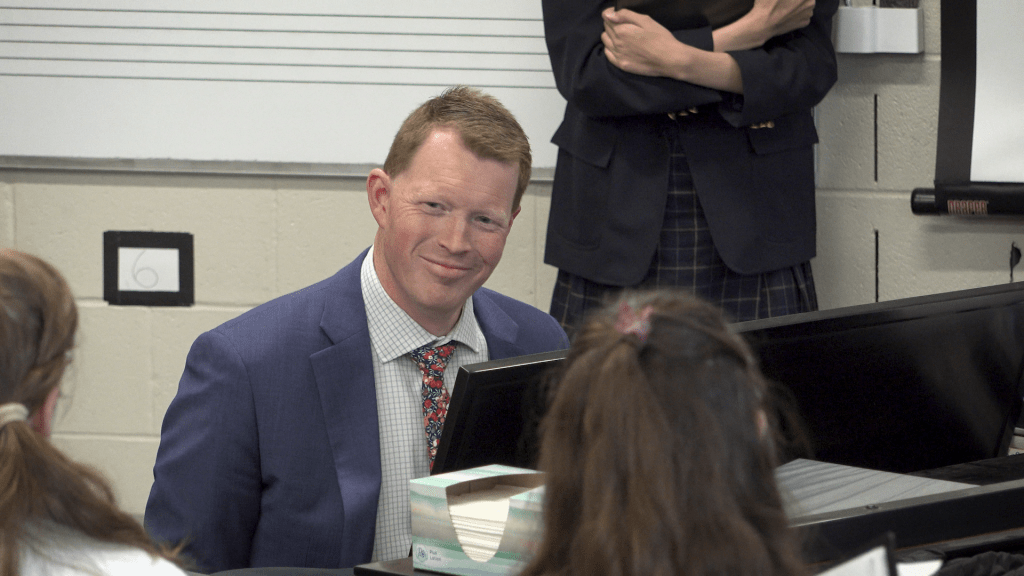
This can happen with students (and did happen pretty much like that last week in music class after a lesson on Schubert) because there are three crucial steps in both of the above conversations.
- Teaching leads to knowing. Knowing starts with an awareness of what’s out there. At the beginning of the year, students new to our school are often talking about Taylor Swift and other people whose names I don’t remember. Just exposing them to something else makes them aware. But it doesn’t make them like it.
- Knowing leads to appreciating. When I give a little background information, a composer’s choice starts to make sense: Vomit jelly beans are actually pizza-flavored; Schubert had a good classical education and loved excellent poetry. Something makes sense and I can appreciate that point of view.
- Appreciating can lead to enjoying. When someone knows the background information and can appreciate a point of view, one can eventually enjoy this new point of view (though they aren’t required to). My friend can look in on my memory of the Jelly Belly tour with my grandmother and smile; my students can listen to Erlkoenig and say “that’s my favorite piece I’ve ever learned about so far.” When we know and begin to appreciate, we can begin to enjoy.
I don’t require my students to enjoy any piece. I do require them to know and think about something long enough to appreciate it. Enjoying classical music can and will come, but never without studying music history.
Click here to purchase Mr. Punt’s new book Classical Music Explained to understand the 6th-8th Grade music history curriculum and start the pathway to enjoying Classical Music.
 The Classical Classroom