
Finishing strong at the end of an academic year can come as a challenge to both students and teachers alike. Amid a myriad of final events, showcases, assessments and deadlines, it’s easy to miss the opportunity to reflect upon the hard work accomplished throughout the academic year that effected change and growth in both students and faculty.
Guided by their teachers, students have continued to search and find beauty and goodness in the literature they read, the problems they solve, the music they sing and the art they create. Through this process, students continue to develop themselves, discern their imperfections and shortcomings, and persevere in working toward becoming the best version of themselves. Taking a moment to guide students in reflection can be a transformative experience that can illuminate a path forward and encourage them to finish the year strong.
One of my favorite stories to share with students on this topic is the significance of Michelangelo’s slave sculptures. Michelangelo left a legacy and clue to his creative genius through unfinished sculptures, called slave sculptures. These sculptures started as a block of static marble. Within each block of marble, Michelangelo foresaw a finished sculpture and envisioned the transformative process of making it beautiful and perfect. These sculptures continue to be a work in progress, never to be completed. Nevertheless, a viewer can see the inner beauty in works seemingly “imperfect” because of their uncompleted state.
In some ways, our students, as well as you and I, are like Michelangelo’s slave sculptures. We are all works in progress, able to mold ourselves to reach our potential. We are aiming toward a goal of aligning our lives and actions toward what is truly good and beautiful. Yet, we often require the guidance of a master to free us from the bonds of what is holding us back from being the best version of ourselves and lead us toward goodness.
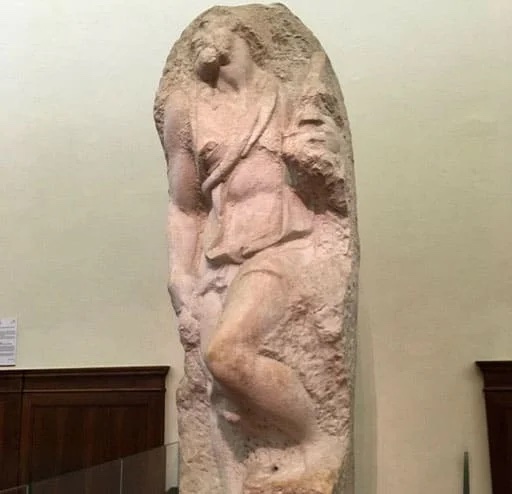


Michelangelo’s Prisoners (or Slaves) at the Academia Gallery in Florence. Photo credit: Academia Gallery.
On this same note of reflection, our school recently hosted an art show for upper school students. In preparation for this summative event in a student’s yearly art endeavors, students selected a work of art and reflected on the work they had completed through writing an Artist Statement. Many of these artist statements were truly impactful and are a testament to student formation. Some even acknowledged aspects of the importance of what students are learning at one of Hillsdale College’s charter schools. I was especially moved by one of these artist statements from a young lady in 7th grade. It’s all about deciding to never give up because thoughtful reflection always clears a path forward. I hope you enjoy it!
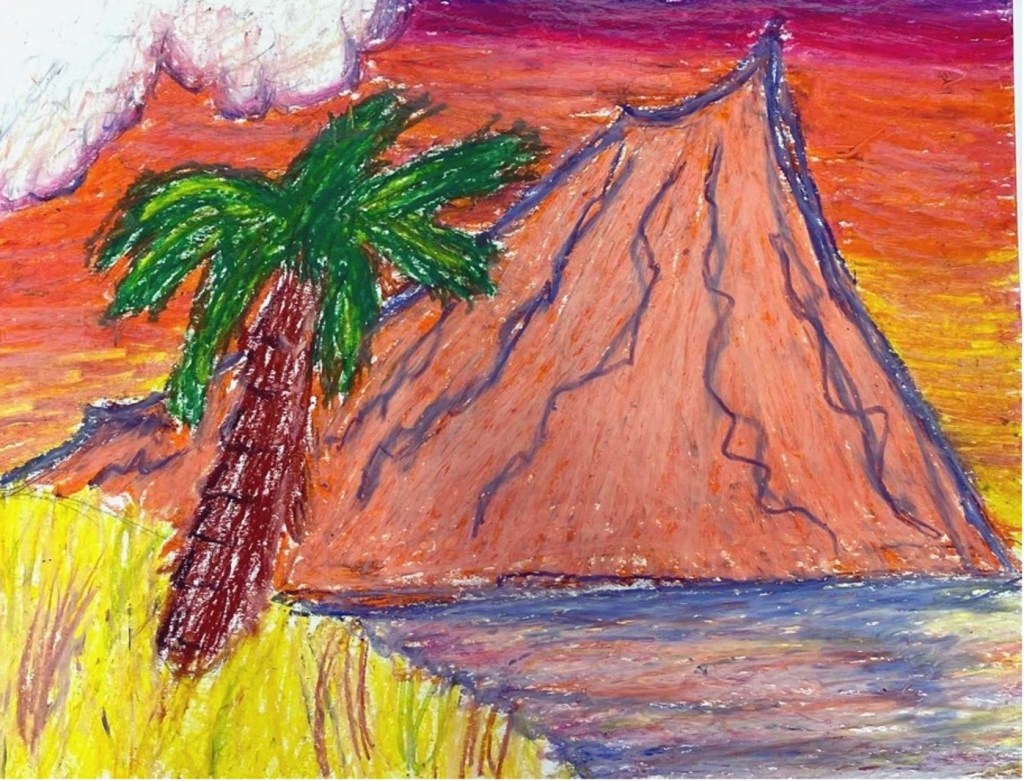
Title: Sunset Mountain in a Mirror
How did you create this artwork?
“I created this artwork by mixing bold colors in oil pastel and applying a layer of white on top to give the effect of a light and airy atmosphere. This sunset scene of a dormant volcano is mirrored by a rippling pool of water created by adding the suggestion of the mountain beneath itself and mixing other atmospheric colors blended together using white in order to create the effect of a mirky, reflective pool.”
What does this artwork mean to you?
“This artwork presented the idea that imperfection can still be beautiful. The mirror of the volcano represents times when I looked in the mirror and told myself that I would never be good enough. I wasn’t perfect, but just like this artwork, that didn’t mean that there was nothing beautiful to be found. I use art as an escape from all of the things that the negative voice within me tries to say about all the dark, hopelessness there is in the world. Life is the most wonderful thing to experience and an amazing gift from the heavens, so why spend it saying that you’re not good enough and should never try? The happy little palm tree in my painting never gave up. Neither will I, neither should you.”
 The Classical Classroom