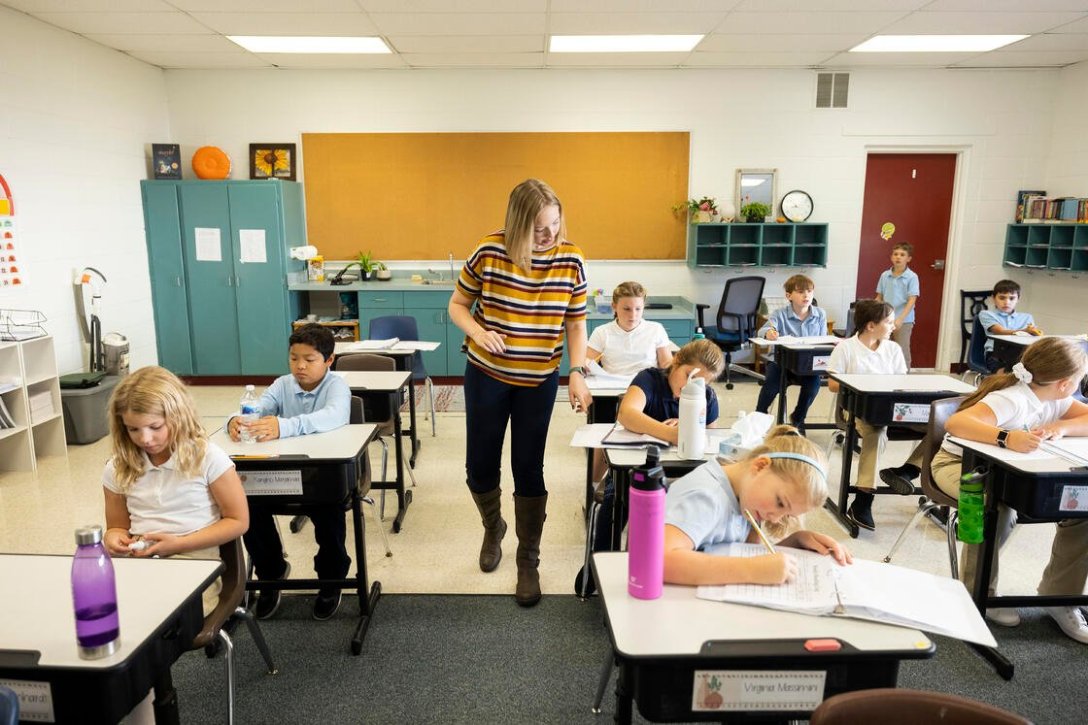
As a teacher in a classical classroom, I hope that my teaching will be effective for all my students. But recently, I heard another educator claim that the education we offer doesn’t work for boys. It is too still, too boring, and too structured. Being in a very full classroom with more boys than girls this year, I would like to speak to this critique.
Category: Classical Education
Reflections on Courage: Veterans Day
We have assembled here today to honor all American veterans: those who have gone before us, those who, we are proud to say, stand here with us, and all who have served in the armed forces for the defense of our great country and our common way of life. We owe our veterans a debt of gratitude that cannot easily be repaid, and words, certainly, will not suffice. But we have also assembled this morning to reflect on what it is that we honor together: on the values of courage and self-sacrifice that our veterans exemplify, and that we hold to be worthy of imitation. Veterans Day is a time for us to ask ourselves: Can we, too, have such virtue? Would we be able to withstand the test?
The Consolation of Teaching
There is one thing, though, which never fails to bring real consolation to me in moments of stress, doubt, or wondering “what is it all for?” The obvious answer, for many teachers, is, of course, their students and the relationships they build with them over the years. This is true of myself as well, but recently my thoughts have dwelt on the everyday interactions, the words my students say, the things they notice, and the things they speak surreptitiously to each other in the back of class when they think, foolishly, that I cannot hear them.
“I don’t remember any of it.”
The goal of students’ education is not perfection, nor is it merely practical skills and good grades. The goal is not even getting an amazing job or getting into the right college. The goal is for students to appreciate what is true, good, and beautiful in the subjects they learn, so they can see what is true, good, and beautiful in their lives.
Tried and True: A Primer on Sound Pedagogy
A Culture of Trust & Accountability
Envision classroom discussions beaming with student involvement, where curious minds are posing thoughtful questions and attentive peers respond with their own hypotheses, solutions, ideas, and extension questions. How do you build a classroom culture that facilitates this level of engagement and willingness to inquire authentically and share ideas courageously?
What I Owe My Students
The Education of the Teacher
Pedagogy and classroom management are necessary, but they are always in service of a higher thing. That higher thing—cultivating within students the wonder and love of learning—ought always to come first. That, then, must also be the end of the education of the teacher when they themselves are students.