Facilitating Student Talk

As a teacher, how do you know that your students are engaged? How do you know what your students are thinking? What ideas arise for them as they assimilate new information with prior knowledge and concepts?  Investigating these questions reveals insights into how students interact with content while simultaneously highlighting the quality of the opportunities… Continue reading Facilitating Student Talk
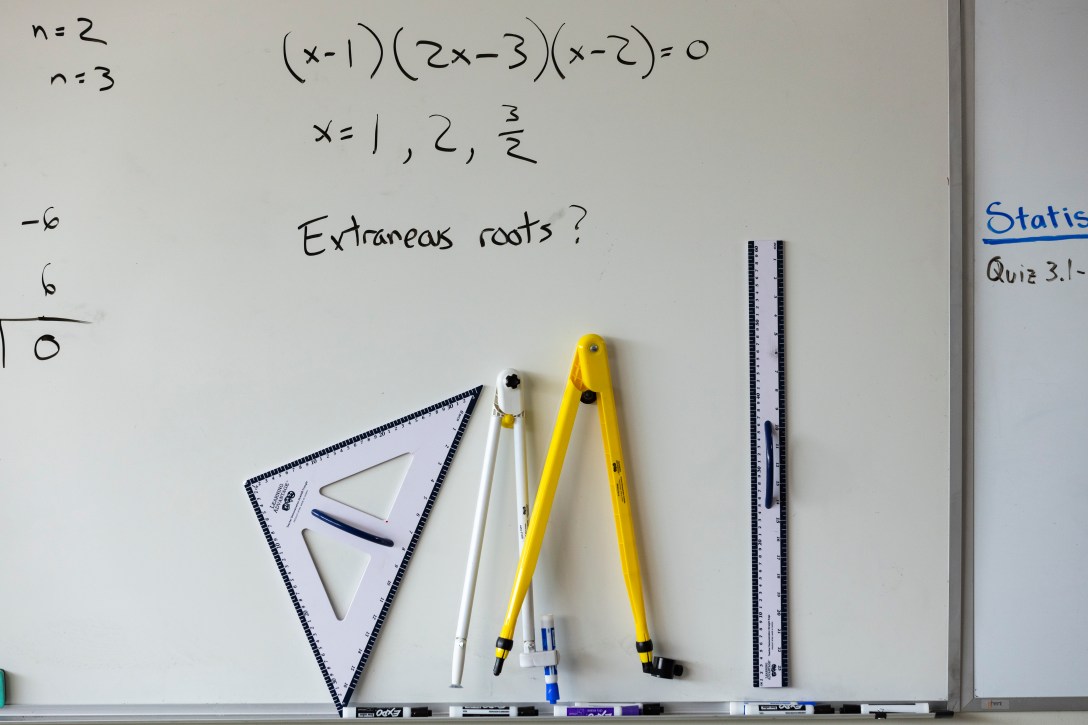
Productive Struggle in Math

George Polya, a master in mathematics education in the early twentieth century, is credited with saying that if a problem takes fewer than 24 hours to solve, it isn't worth solving. When I first heard this, I was discouraged. How can I help my students to understand math if everything worth knowing takes so much… Continue reading Productive Struggle in Math

Meaningful Mistakes & Desirable Difficulties

In teaching rigorous content, there’s a golden mean between safeguarding students from any glimpse of ‘failure’ and letting them flounder miserably. That sweet spot is what I like to call the zone of desirable difficulties and meaningful mistakes. Nobody likes to feel like they’re wrong or unable to solve problems, especially adolescents keen on impressing… Continue reading Meaningful Mistakes & Desirable Difficulties

The Power of a Demonstration

There are a number of mistakes I have made teaching throughout the years, but I think perhaps the biggest was not providing enough studio demonstrations when I first started teaching art. Back then I had a fear that my demonstrations would not turn out well and I would lose credibility with the class if they… Continue reading The Power of a Demonstration

The Day Before a Break

With everyone’s minds on the family gatherings, vacation trips, or general time of relaxation so near at hand, it is especially hard to keep students’ attention and interest in class materials. However, we don’t want to waste the precious minutes we have with our students and make school that day feel like a waste for both you and them. So, what can be done to make the day productive? 

Colored Paper in Math Class

We began our lesson on fractions, and I prepared to say the words I read in the manual the day before. "The numerator is the number above the fraction line. The denominator is the number underneath the fraction line. They represent parts being taken or the total number of parts in the whole, respectively." As I considered these words, I realized how abstract these ideas are. My lesson could be much more effective with a practical activity in my students’ hands.